



E Pluribus Unum, Out of One, Many September 2026
E Pluribus Unum
Out of Many, One
September 2026
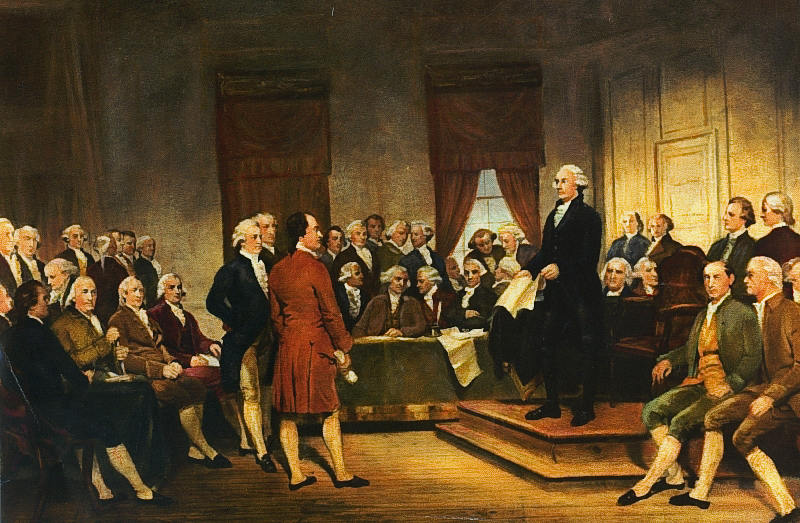
On September 17, 1787, at Independence Hall in Philadelphia, Pennsylvania, 39 delegates to the Constitutional Convention endorsed the document created during their four-month-long convention. The U.S. Constitution that they wrote lays out the framework for our federal government and delineates how its three branches, the legislative, executive, and judicial bodies should function. Not all the delegates, however, felt that the constitution had gone far enough. They felt it needed further clarification and protection. This was the purpose of the amendments, which the first ten are known as the Bill of Rights. The First Amendment addressed the issue that we have meditated on throughout the summer. E Pluribus Unum. Out of Many One. People from the various states were concerned about their differing religious practices. Could Massachusetts Puritans, Connecticut Congregationalists, New York Dutch Reformed, Delaware Lutherans, Pennsylvania Quakers, and Virginia Church of England followers, truly become one?
The First Amendment to the Constitution was to deal with this issue in two ways. The first is the so called Establishment Clause and the second is the Free Exercise Clause. The Establishment clause prohibits the federal government from “establishing” a state religion. The precise definition of “establishment” is unclear. Historically, it meant prohibiting state-sponsored churches, such as the Church of England which was the general practice in half of the original 13 colonies. While the free exercise clause allowed for the freedom of individuals to practice their faith unencumbered by the government.
George Washington was a strong advocate of religious tolerance. In 1775, he issued an order to Colonel Benedict Arnold, who was about to invade Canada. The order stated that Arnold’s army was “to avoid all Disrespect to or Contempt of the Religion of a Country by ridiculing any of its Ceremonies or affronting its ministers or Votaries.” Washington later forbade his own troops from celebrating Pope’s Day, wherein Protestants often burned effigies of the pope. He received acclaim from the Universalists when he supported the right of one of their clergy to serve as a chaplain in the Continental Army, and his respect was also extended to the Jewish community.
The complete separation of church and state may not have been as much of a priority for Washington as it was for some of the founding fathers. Washington believed that the two should coexist for the good of society. As he emphasized in his farewell address, religion was a strong support for morality, which he thought was essential to good government.
On Rally Sunday, September 13th, we will conclude our nation’s 250th anniversary celebration. I would like to think of it as our nation 250th anniversary of inter-dependence. At the end of the Revolutionary War the colonists discovered how much they needed each other to survive. We need each other today as well. We may not agree with our neighbors on the issues of religion and politics, but we need each other to face the daily challenges of life.
Join us as we celebrate this 250th anniversary in music, history and God’s Word.
Pastor, Pastor Arden Haug

